
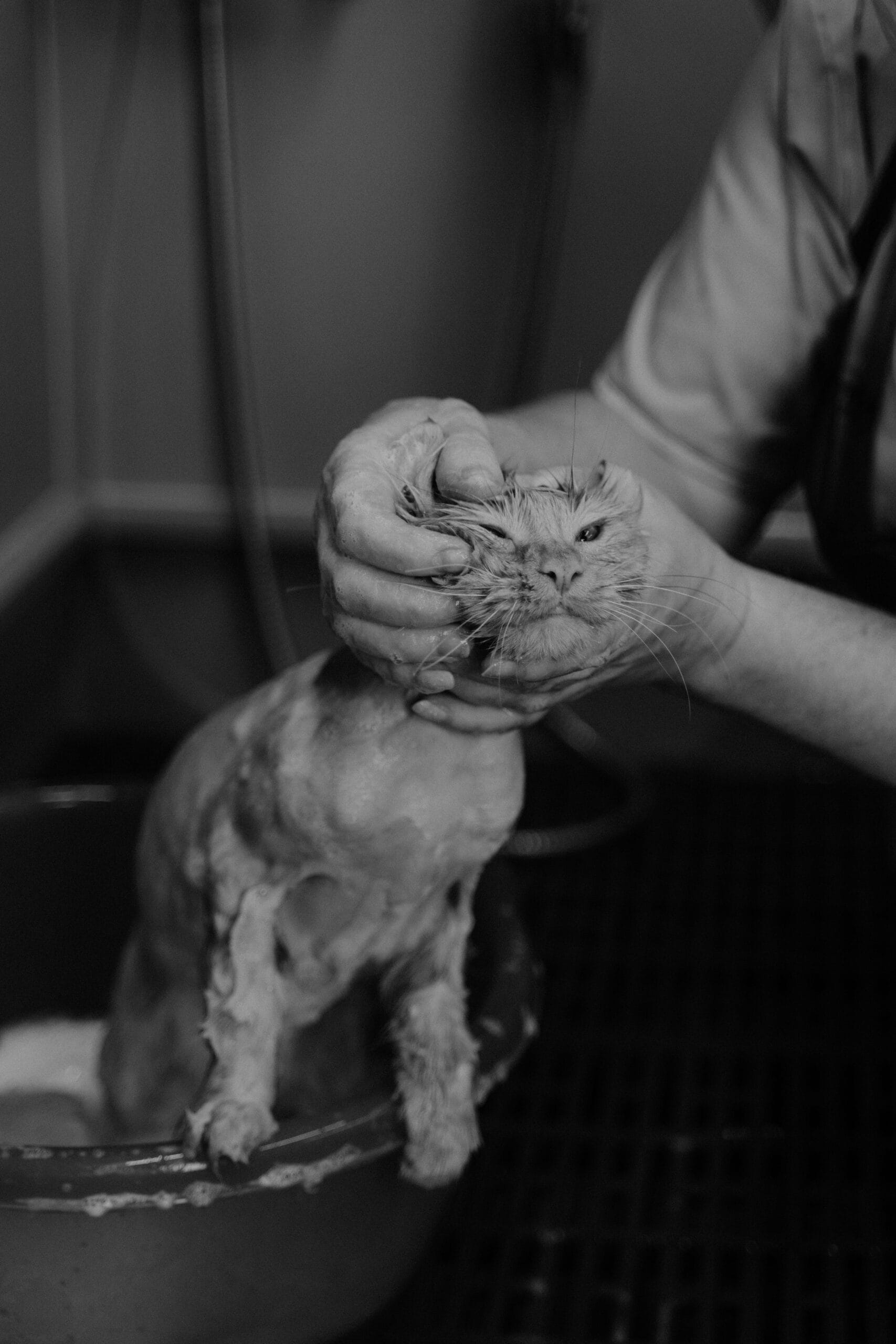
Understanding why cats need to scratch and why scratching is an important part of a cat's normal daily routine that should NOT be discouraged.
So by understanding the 4 major reasons why cats need to scratch we can start to manage the scratching process reducing their need to scratch and damage our furniture.
Here you will learn about safe and effective ways to care for your cats claws.
What are 4 Major Reasons Why Cats Need to Scratch?
1. To remove the dead outer layer from their claws
Their claws are constantly growing, and scratching is their way to keep that growth under control. Cats claws are like layers of an onion and as the claws grow, the outer layer dulls and falls off. Scratching helps with this however it does little to file down your cat's nails - they are still very sharp and need to be trimmed.
Cats scratch partly because it feels good, partly to sharpen their claws, and partly because it helps shed their claw sheaths. If you've lived with a cat for a while, you've surely found "skeletons" of cat claws around the house. These are in the shape of a claw but empty, so to speak.
In the wild, cats need sharp claws to climb, hunt and protect themselves, so scratching is a hardwired behavior that keeps those claws in shape. Just like our fingernails, cat claws grow regularly and need care - a "pet-icure".
2. To mark their territory with scent glands in their paws
Scratching is also a cat's method to mark its territory. If you have recently acquired a new cat and your original cat suddenly starts scratching furniture and door frames, it might just be telling the new cat 'this area is mine'.
Different glands in the paw of the cat leave behind a scent when scratching. Along with claw marks and husks, this scent plays an important role in communicating important information about the area for other cats.
If your cat scratches only new objects or furniture, it indicates that it is marking territory. This will occur to obtain ownership over your new items. Cats may also re-mark their territory if a new human, cat, or dog enters your home. There are a number of pheromone related deterrents that can provide help with reducing territory marking.
3. To help them release tension and stress
The 9 Signs of Stress in Cats article provides a detailed explanation, however in summary, they are:
- Spraying urine on furniture - both male and female cats may do this.
- Inappropriate elimination and avoidance of litter box
- Excessive grooming leading to hair loss or reduced grooming possibly due to pain
- Aggression and increased scratching of furniture
- Excessive vocalization - meow, hiss or growling
- Restlessness
- Inactivity and lack of interest in food, toys or you.
- Avoidance of a specific location or person.
- Significant changes in appetite - both increased and decreased
If you feel your cat is displaying any of these signs of stress, you should provide immediate comfort and speak with your local veterinarian to identify any underlying health issues.
4. To stretch and flex their muscles
When a cat scratches, they are doing more than just sharpening their nails. They are stretching their muscles. A cat may scratch when they wake up, when they see their human come home, or when they want attention. They also do it when they are “kneading” with their paws, and while this rhythmic motion can sometimes be painful for you, it’s actually sign of affection.
Scratching is an important part of a cat's daily routine and should not be discouraged but managed.
How to Care for Your Cat's Claws
Generally speaking, scratching will remove the dead outer layers of a cat's claw, allow them to stretch, etc, but they will still have sharp tips. This is important if they are outdoor cats and need to defend themselves and climb trees.
Why Trim your Cat's Claws?
- It is a good way to get your cat used to being handled
- Trimming is a good idea for indoor cats as it will remove the sharp tips of your cat's claws and reduce the damage to your furniture. Outdoor cats need to defend themselves and climb trees so trimming may not be a good idea.
- Less active cats, or cats with mobility problems may develop overgrown claws. Front claws retract into their paws and can curve and grow into their paw causing long term health issues.
- A cat's rear claws do not retract so cats sharpen their rear claws by chewing them or by lying on their side and scratching your furniture as shown on the picture above.
- A long cat's claw can get caught on carpet, toys, stuck whilst jumping etc that can lead to a significant injury.
- Senior cats can lose the ability to retract claws and may ignore scratching posts due to joint pain.
- Trimming frequency can range from every 2 weeks for kittens to monthly for senior cats.
Trimming a cat's claws every few weeks can be an important part of maintaining your pet's health.
Not only does a quick trim protect you, your pet and your family, it can also reduce their need to scratch, avoid injury, and hence do less damage to your sofa, curtains and other furniture.
How to Trim Cat Claws?
Whilst trimming a cat's claws is necessary for indoor and senior cats, you may prefer to ask your vet to guide you through your first cut.
This can be a nervous time for you and your cat so it's best to make sure you have the tools and knowledge to do a good job. The image and video below will explain the importance of a stress free environment and only cutting the tip of each claw so that the quick is not cut which may result in bleeding. The quick is usually easy to see as the triangular pink part at the top of the claw. Styptic Powder will quickly stop any bleeding should there be any accidents.
Check out this Wiki article for a detailed step by step on How to Trim Your Cat's Nails.
Trimming a Kitten's Claws: Cutting a kittens claws requires special treatment as any negative experiences will be carried forward to future trims. A kitten can be introduced to trimming as early as 4 weeks of age and then every 2-3 weeks. Only cut the tip and stay away from the pink quick. In addition to the advice in the Wiki article and in the video below, ensure you have all your tools ready, wear long sleeves (kittens can be restless and have very sharp claws), have a warm towel for the kitten to rest on, and have a few treats ready for after the event. Some fellow cat lovers trim their kitten's claws one paw per day. This helps to minimize the time these initial possibly stressful trims can take and helps your kitten learn that these can be rewarding experiences.
Trimming a Senior Cat's Claws: Older cats need to have their claws trimmed every few weeks as they are generally less active and their claws aren't trimmed down naturally. They can also develop arthritis in their latter years resulting is less movement to minimize any pain they feel. Overgrown claws can grow into their paws and cause health issues so it is best to cut their claws on a monthly basis.
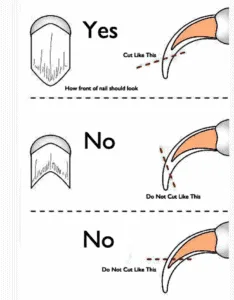
Close Up Image of Cat Claw Cut
This image shows the recommended location and angle to cut your cat's claws.
Vet Demonstration of a Claw Trim
This video on how to trim your cat's claws by veterinarian Dr Christianne Schelling and Charlie the cat not only demonstrates the best method to trim cat's claws without splitting the nail but also the best way to sit and hold your cat whilst creating a low stress environment. A few treats after the trim can help with training your cat to tolerate this process. It can be applied from kittens to senior cats.
What are the Best Cat Nail Clippers?
There are 4 different types or styles of cat nail clippers - scissors, guillotine, pliers, and grinder. If you are unsure which one is best for your cat, check out our guide on how to select the best cat nail clipper for a brief description, pros and cons of each style and a description of the best cat nail trimmers for each style.
At a Glance: Here are the top picks for each style of cat nail clipper.
Scissors Style

Guillotine Style
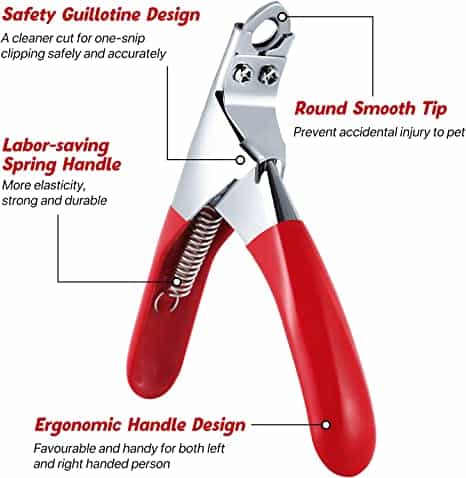
Pliers Style
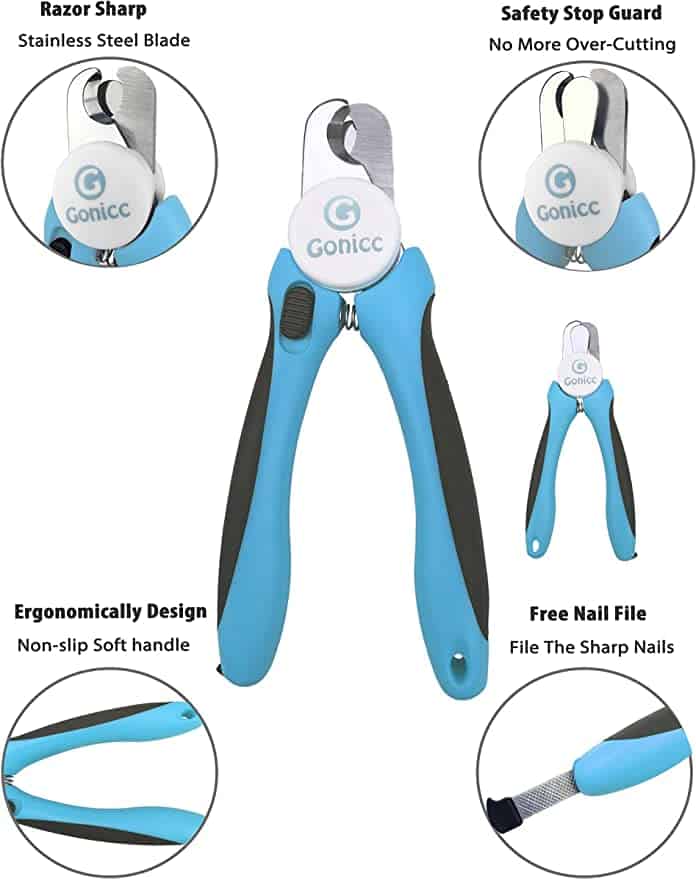
Grinder Style

Will Cat Claw Caps Stop Scratches on Your Furniture?
Are cat claw caps a gentle solution to protecting your furniture and cats paws? Learn about the benefits, myths, application, and selection options of this low cost, effective solution.
Declawing is NOT an Option
Some people have suggested declawing but it is NOT an option. Unfortunately, in the past this was a common practice. Declawing cats is the equivalent of trimming a human's nails by cutting off each finger at the knuckle. It is cruel, painful, traumatic, and is banned in most countries. It leads to permanent or intermittent lameness, chronic back pain, and significant changes in a cat's behaviour. Declawing should NEVER be an option!
If you wish to know more, please see this very graphic and unsettling article on declawing.