
Cat Grooming
The full picture of cat grooming — nails, coat, bathing, ears, and everything in between — so you know exactly what your cat needs and where to start.
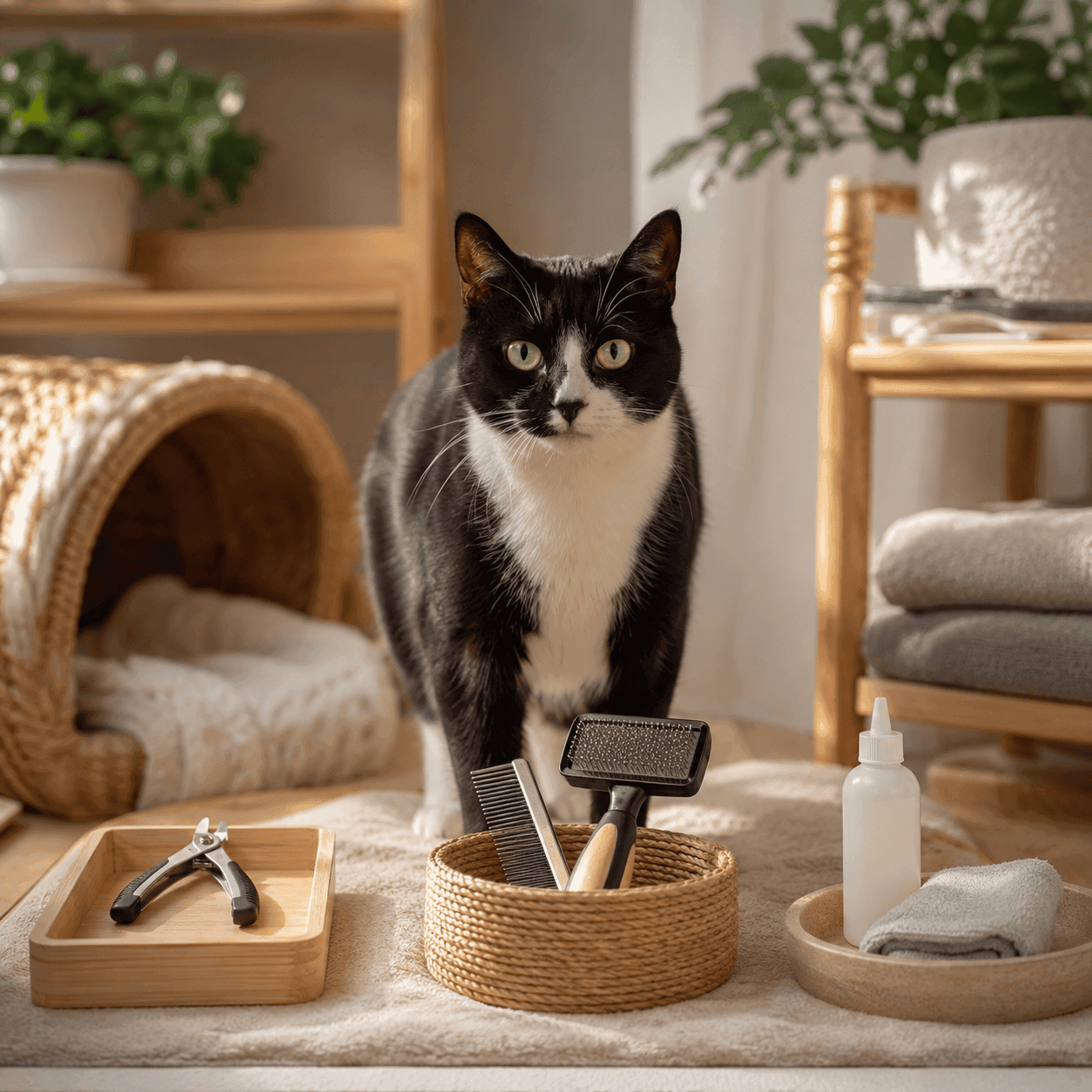
In Summary
- Grooming isn’t one task, it’s several loosely connected ones — nails, coat/shedding, bathing, long-hair and matting care, and ears — and most cats only need real help with one or two of them.
- Indoor cats still need your help with grooming; self-grooming handles a lot but not everything, especially nails and, for long-haired cats, mats.
- If your cat has quietly stopped grooming themselves as much as they used to, that’s common in older, overweight, or arthritic cats — it’s worth noticing, not ignoring.
- Matted fur down to the skin isn’t a “just cut it out” situation — scissors that close near pelted skin describe an injury risk, not a home haircut.
- Trying something hands-on for the first time — trimming nails, working out a mat, cleaning ears? Ask a vet or groomer to show you the correct technique once, in person, before you try it solo. A few minutes of demonstration prevents most of the mistakes that make grooming stressful for you and your cat.
- Start with whichever section below matches what’s actually on your mind today; you don’t need to master everything at once.
Jump to a section:
Why Cat Grooming Actually Matters (and How Often It Really Needs to Happen)
Most cat owners already brush their cat sometimes and figure that’s grooming handled. It’s a fair assumption, and it’s not wrong exactly — it’s just incomplete. Grooming spans nail care, coat care, and ear/dental care, and a cat can be doing brilliantly on one (coat looks glossy, no mats in sight) while quietly needing help on another (overgrown nails, waxy ears) that doesn’t show up unless you’re actually looking.
How often should you groom your cat at home?
For most healthy adult cats: a quick brush 1–2 times a week (more for long-haired breeds), nail checks every 2–3 weeks, and ears looked at roughly monthly — not scrubbed, just checked. None of this needs to be a production. Five minutes done consistently beats an hour done rarely.
Do indoor cats really need grooming, or do they take care of themselves?
Cats are genuinely good self-groomers — that raspy tongue does real work. But self-grooming has limits: it doesn’t trim nails (cats sharpen and shed claw sheaths, they don’t shorten them), it can’t fully manage a long or thick coat once shedding season hits, and it tends to break down first in cats who are older, overweight, or dealing with joint pain, since reaching every spot gets physically harder. If you’ve noticed your cat’s coat looking a little more unkempt than it used to, or they seem to have quietly given up on the back half of their body, that’s a common and very ordinary sign of aging or discomfort — not a behaviour problem, and not something to panic about, but worth a slightly closer look and maybe a vet mention if it’s a sudden change.
Community threads and cat forums consistently echo the same thing: the cat owners who stay ahead of grooming are the ones who treat it as routine maintenance, not crisis response. That’s the approach this hub is built around — a little, often, across every area, rather than waiting until one of them becomes a problem.
Does the season change anything?
A little, yes — though it plays out differently depending on the area. Nails often need trimming less often in summer if your cat gets outside and wears them down naturally, and more often in winter when everyone’s less active. Coats show the biggest seasonal swing: spring and autumn shedding seasons can mean brushing two or three times a week instead of once. Ears and teeth don’t really follow the seasons the same way — that routine mostly just stays routine year-round.
When is it worth calling in a professional?
Most of what’s on this hub is a five-minute job you can do at home, and that’s the point of building it this way. But there are real moments where a groomer or vet earns their fee: fur matted badly enough it’s pulling at the skin, a nail that’s grown ingrown or clearly painful, a cat too stressed or feisty to handle safely on your own, or anything ear/dental-related that crosses from routine into a red-flag symptom (see Ear and Dental Care below). None of that means you’ve done something wrong — it just means the job’s moved past what a home routine can safely handle.
Nail Care
Nail care is the one area almost every cat needs direct help with, indoor or out — claws grow continuously, and without regular trims they can get uncomfortably long, snag on fabric, or in older cats, curl back into the paw pad.
How do I know when it’s time to trim my cat’s nails?
If you can hear your cat’s claws clicking on hard flooring, or you can feel the tip catch when they knead, it’s time. Most cats need a trim every 2–3 weeks, though this varies with activity level and surface (a cat who scratches a rough post daily wears down faster than one who doesn’t).
What’s the safest way to trim a nervous or difficult cat’s claws?
Go one or two nails at a time rather than trying to finish the whole paw in one sitting, work during a calm moment (not right after play or a startle), and have a treat ready immediately after — even a “good enough for today” trim beats a stressful all-at-once session. Sharp, well-maintained clippers matter more than most owners expect: a dull blade crushes rather than cuts, and that’s what actually makes cats dread the process.
Our Cat Claw Care 101 guide covers the fundamentals — why cats scratch, how to tell when claws are actually overgrown, and when it’s a vet matter instead of a DIY one. Once you’re ready to pick a tool, our full clipper guide breaks down all four clipper types side by side, including a comparison table matched to your situation — so you can choose the right one for your hands and your cat.
Coat Care
Coat care covers more ground than most owners expect — brushing and shedding, bathing, long-hair-specific maintenance, and what to do about mats — and it’s the one area where “how much your cat needs” varies the most by coat type.
How often should I brush my cat to keep shedding under control?
Short-haired cats generally do well with a weekly brush, bumped up to 2–3 times a week during spring and autumn shedding seasons. Long-haired cats need it closer to every other day, sometimes daily during heavy shedding — more on that below. If your cat is older or has slowed down physically, they may need more brushing help from you, not less, since they can’t cover as much ground on their own anymore.
Do cats actually need baths, or is brushing enough?
For most healthy cats, brushing plus normal self-grooming is genuinely enough — a full bath is really only needed if your cat gets into something sticky, oily, or otherwise beyond what a tongue and a brush can handle, or if a vet has specifically recommended it (some skin conditions, or cats who can no longer self-groom effectively). Community consensus on this is pretty consistent: most cat owners who bathe their cat regularly are doing more work than their cat actually needs, not less.
What’s different about grooming a long-haired cat compared to a short-haired one?
The core difference is frequency and thoroughness — a long coat tangles at the undercoat before it’s visible on the surface, so brushing has to go all the way down to the skin, not just skim the top layer, and it needs to happen closer to daily than weekly. Areas that move the most (behind the ears, armpits, belly, behind the back legs) mat first and fastest.
What should I do if my cat’s fur is matted down to the skin?
If a mat is small and loose, a mat comb or detangling spray can usually work it out gently. But once a mat is tight and sitting directly against the skin, scissors are genuinely risky — cat skin is thin and mats pull it up close to the blade, so a “quick snip” is a real way to cut your cat, not just the fur. At that point, a groomer or vet with clippers built for this is the safer call, not a DIY fix.
This is safety guidance on knowing when to stop and get help.
Ear and Dental Care
The most overlooked of the three areas, and the one where “checking” matters more than “doing.”
How do I clean my cat’s ears safely at home?
Only clean what you can see — a cotton pad or cotton-free wipe with a vet-approved ear cleaning solution, gently wiped around the visible outer ear. Never use cotton swabs down into the ear canal; that’s how debris gets pushed deeper instead of out. A little light-brown wax is normal; dark debris, a strong odor, redness, or your cat pawing at their ear repeatedly is worth a vet visit, not a home remedy.
This section is general guidance, not veterinary care. If your cat’s ears look inflamed, smell unusual, or they’re clearly bothered by them, please see a vet rather than treating it as a routine cleaning issue.
If you’ve never cleaned a cat’s ears before, ask your vet or groomer to show you the correct technique in person at your next visit. A couple of minutes of hands-on demonstration builds confidence faster than any written guide, and it’s the safest way to start.
What about brushing my cat’s teeth?
Dental care is the part of grooming most owners skip, but plaque builds up for cats the same way it does for us. A soft finger brush or small pet toothbrush with cat-specific toothpaste (never human toothpaste — it’s not safe for cats to swallow), a few times a week, is the gold standard, though even two or three times a week genuinely helps. Dental treats and chews carrying the VOHC (Veterinary Oral Health Council) seal are a reasonable addition if brushing doesn’t stick, but they’re a supplement, not a substitute.
Persistent bad breath, drooling, or a cat pawing at their mouth isn’t a brushing problem — it’s a vet visit. Those point to possible gum disease or dental pain, not something a toothbrush fixes at home.
Frequently Asked Questions
Below are the questions cat owners ask most often across every part of grooming — quick answers here, with links through to the fuller guides where they exist.
As a baseline: brush 1–2 times weekly (more for long-haired cats), check nails every 2–3 weeks, and glance at ears roughly monthly. Consistency matters more than duration — five minutes regularly beats a rare deep session.
Self-grooming handles a lot, but not nail trimming, and not a long or thick coat once shedding picks up. Indoor cats still need your help with those two areas specifically, regardless of how tidy they otherwise keep themselves.
Listen for clicking on hard floors or feel for a catching tip when your cat kneads — that’s the signal. Most cats need a trim roughly every 2–3 weeks; see our nail clipper guide for tool options.
Trim one or two nails per sitting instead of the whole paw at once, pick a calm moment, and reward immediately after. Sharp clippers matter — a dull blade crushes the nail, which is what actually makes cats dread trims.
Weekly for short-haired cats (2–3 times during shedding season), closer to every other day for long-haired cats. Older or less mobile cats often need more brushing help, not less, since they can’t self-groom as thoroughly as they used to.
For most healthy cats, brushing plus normal self-grooming is enough — baths are for genuinely sticky or oily messes, or specific vet-recommended situations, not routine maintenance.
Long coats mat at the undercoat before it’s visible, so brushing needs to reach the skin, closer to daily than weekly. High-movement spots (behind the ears, armpits, belly) mat first.
Small, loose mats can often be worked out with a mat comb or detangling spray. Mats tight against the skin are a job for a groomer or vet with proper clippers — scissors near pelted skin are a genuine injury risk, not a quick fix.
Wipe only the visible outer ear with a vet-approved solution and a cotton pad or cotton-free wipe — never a cotton swab down the canal. Dark debris, odor, or repeated pawing at the ear means it’s time for a vet visit, not a home clean.
We haven’t personally tested every product mentioned on this hub or its linked guides. What’s here is a synthesis of cat owner community feedback (Reddit, Facebook groups), specification comparisons, and, where relevant, vet and behaviourist guidance — framed as research synthesis, not a personal review. Health-adjacent guidance (ears, matting near skin) is general information, not veterinary advice — when in doubt, a vet visit is always the right call.