
As a cat lover I initially had some concerns, spent considerable time researching these claw caps, fought with my two cats during the application process, but am now confident they can provide the benefits I was seeking.
However, you should be aware of some issues when using Cat Claw Caps?
What are Cat Claw Caps?
Cat Claw Caps, cat claw covers, or cat nail covers are soft coverings that you glue over your cat's nails to minimize the damage to your furniture inflicted by sharp cat claws.
They can be made of vinyl, plastic, or rubber.
They are safe for your cat, generally inexpensive, can be applied at home, and last about 4-6 weeks.
They are sold in a range of sizes and colors. An example of the cap over the cat's claw is shown in this picture.
They are not suitable for outdoor cats.
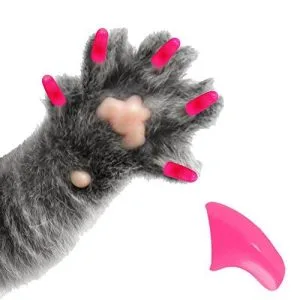
An example of the cap over the cat's claw
What are the Benefits of Cat Claw Caps?
In summary:
Common Concerns About Cat Claw Caps.
Articles on Cat Nail Caps by the McKinney Animal Hospital and the National Cat Groomers Institute dispel myths and concerns about cat claw caps. In summary:
- They are safe! Cat's nails can still retract with caps on and can still make all the same natural movements that they do without the caps.
- When applied correctly, cat nail caps are soft, non-toxic, humane, and effective. They should not be able to damage or cause discomfort to your cat's paws or beds. There are no reported examples of infections due to wearing of caps.
- Cat Scratchers are still required to allow cats to stretch, and mark their territory with scents.
- Initially nail caps could drop off earlier than expected due to your cat's biting or picking them off. But after a few applications when your cat becomes used to nail caps, then they will last the full 4-6 weeks. Unfortunately there are some cats who will not tolerate nail caps and you will need to trim their claws every 3-4 weeks.
- Caps are not a permanent solution. A cat's claws continue to grow and after about 6 weeks they fall off with the underlying layer and you will need to trim their claws again. Senior cats may take longer as their claws don't grow as usual. If you need to remove claw caps just trim the tip of the claw cap using your cat claw trimmer, the adhesive seal will be broken and they should soon fall off.
Some possible negatives:
- Some people may consider them ridiculous and just a fashion statement rather than consider the advantage they offer of reduced scratches to their furniture.
- It can be difficult at first to apply the cat claw caps especially if your cat is restless or aggressive, however the advice offered in the video below will provide you with the confidence you need to apply the caps.
Cat claw caps can be very effective at reducing the damage caused by a cat's claws but they do require on-going monitoring and re-application.
How to Apply Cat Claw Caps?
Veterinarian Dr. Christianne Schelling and Charlie the Cat show the claw caps application process. This video takes you though the entire process explaining what to do and what NOT to do. Dr Schelling explains the preparation process and some training tips on the best way to sit and hold your cat whilst creating a low stress environment.
This process can be applied to all cats from kittens to senior cats.
Most complaints about the effectiveness of claw caps can be traced back to being incorrectly applied. If you have concerns seek out advice and assistance from your local veterinarian.
- Trim your cat's claws (except kittens as a full claw length is needed for the cap).
- Test you have the correct cap size by applying the first cap without adhesive to ensure it isn't too large. If so, just cut the tip off the open large end of the cap.
- Fill about one-third of each cap with adhesive. If you accidently use too much and have an overflow or the glue spills it may get on the cat's fur and your hands. To remove the glue from your hands you can use any nail varnish remover. Do NOT use nail polish remover on your cat. Nail polish remover can be highly toxic to cats. To remove any spills of adhesive on your cat's fur vegetable oils are the best and safest solvents to use. Any vegetable -based oil such as canola, corn or peanut oil will work. You may find this article on How to Remove a Glue Trap from a Pet helpful as it contains information on how to safely remove adhesive from a cat's fur.
- Expose the claw then cover it with the cap.
- Wait until the adhesive is dry (approx. 5 minutes) before applying the next cap.
Note to Reader: I have two cats, a mum and daughter. Mum is pretty laid back and despite some initial biting at the test cap over a couple of days, she eventually got used to it and I able to apply the others on consecutive days. The daughter however wouldn't sit still, and I had to apply a number of test caps over a couple of weeks. She eventually stopped biting them off!! A month later and they are still all there. I highly recommend colored caps as they are easier to find after being bitten off.
How Frequently Do Cat Claw Caps Need Replacing?
Cat claw caps can minimize the damage caused by your cat scratching furniture but it will only delay the need to trim their claws by a few weeks. A cat's nails still grow and after a few weeks the caps will fall off with the old dead claw sheath.
This is an indicator that it is time to trim your cat's claws and then reapply the caps, if desired, to both front and back claws.
How to Select the Best Cat Claw Caps for You?
There are thousands of Cat Claw Cap suppliers so here are a few factors to consider:
- Size: Ensure you purchase the correct claw cap size. Caps come in various sizes that relate to the weight and age of your cat. Each supplier includes size options on the package but a general size guide is:
- Kitten – less than 6 months and less than 6lbs. (approx. 2.5kg)
- Small – 6+ months and 6-11 lbs. (approx. 2.5kg – 5kg)
- Medium – 11-16.5 lbs. (approx. 5kg to 7.5kg)
- Large – above 16.5 lbs. (approx. 7.5kg).
- Color: Caps come in a variety of colors including florescent and glow in the dark. Clear caps are also available, if preferred, however multi color caps are preferred as they are easier to see when attaching and if lost.
- Packaging: In addition to the caps, adhesive and applicator tips are standard. Some suppliers may include cat claw scissors which will increase the price of the product.
- Quantity: Purchase an appropriate quantity for your needs. A cat usually has 18 claws in total. So a pack of one hundred caps would last about 20 weeks if the caps were replaced every 4 weeks.
- Cost and Value for Money: Choose the product that is best value for money. I usually calculate the price per cat cap. For example, product A of 100 pieces for $20 is 20 cents per claw. Product B of 20 pieces for $2 is 10 cents per claw. So I would look at Product B initially from a cost basis but then check is the color I want available and how frequently do I have to purchase? It really is up to you.
Frequently Asked Questions
No. They are for internal cats only. Primarily because outside cats sometimes need to defend themselves and the soft caps would make them vulnerable.
Whilst the caps are non-toxic, it is possible a small child or baby could choke.
Caps should fit snugly. Some kittens as early as 12 weeks can wear Claw Caps but it is best to just try one cap to ensure it fits snugly. You may need to trim the base of the cap to make it smaller and be the correct size to fit the nail. Check "How to Select the Best Cat Claw Caps" above for further information.
Conclusion
Whilst it is virtually impossible to stop the urge for a cat to scratch, cat claw caps offer a low cost, effective solution. Get the little miracle that makes a big difference and buy one of these top 5 bestsellers from Amazon.
However, if this isn't the solution for you and your cat, then check out the other ways to stop your cat scratching furniture.